
- Home
- Social network
- Things to do
-


When selfies go wrong: don’t smash, break or damage artworks!
An Italian student smashed a Greek sculpture at Milan’s Academy of Fine Arts of Brera after he hopped on its lap in order to capture that perfect selfie.
- Travel routes
- Fellow travelers
-
In Oaxaca, Mexico, you can’t celebrate the holidays without radishes!
Every year on December 23, the Mexican state of Oaxaca presents the most impressive display of carved vegetables in the world.
- Stories
All content and media files are published under a Creative Commons Attribution-ShareAlike 4.0 International License (CC BY-SA 4.0)

Cathedral of Saint Peter (Catedral de Guayaquil)
Guayaquil and surrounding
Temples, Churches
Address: Catedral de Guayaquil
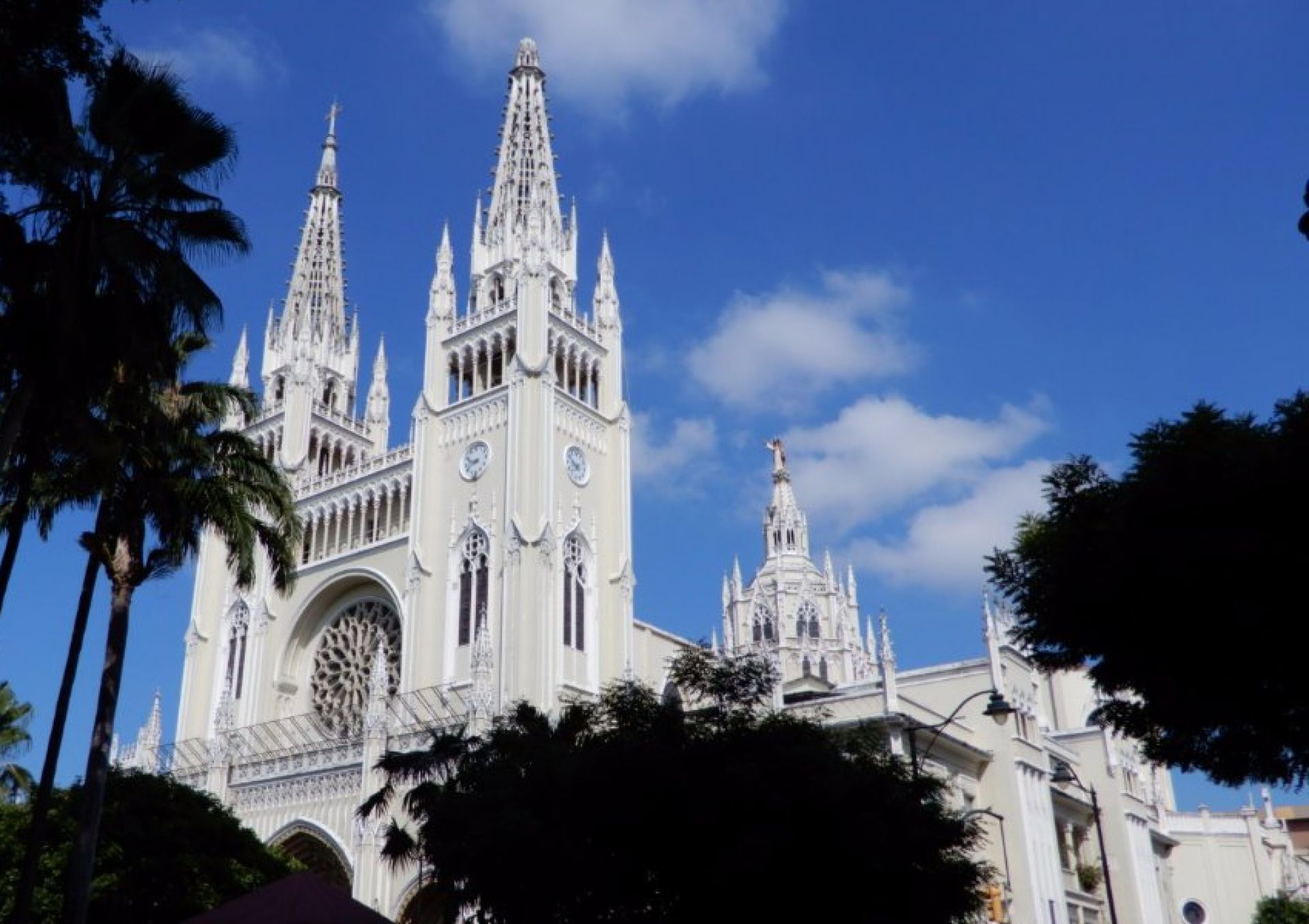
The main cathedral of Guayaquil is the architectural gem of the city, built in the Neo-Gothic style in 1924-1937.
Initially, the church, built of wood in the 15th century, stood in a different place and was called Temple Matiz. Unfortunately, because of fires and frequent pirate raids, it got destroyed in 1695. It was decided to build a new temple but in a safe location. So, this is how the Cathedral of Saint Peter appeared in the city.
But its original appearance was different from the beauty that you can see now. Yes, it was a temple right in the heart of Guayaquil, in the Park Seminario. Indeed, it was a big and relatively attractive church designed in the colonial style. But only in the 30s of the 20th century it was decided to rebuild it anew to make it more monumental, significant and remarkable. The cathedral was to be built with modern materials and in the best architectural style for temples, the Neo-Gothic one.
The temple towers almost rise to the sky. They are so elegant and chiseled that sometimes may seem weightless. Colorful stained glass windows add to the beauty of the temple. When the light enters the interiors of the church, it seems to glow with dreamlike colors.
The crown jewel of the cathedral is the marble altar that was brought here from Cuenca. Big, heavy, gorgeous, it dominates the architectural design of the temple.
Unfortunately, for some reason, one of the most beautiful and oldest artifacts of Guayaquil didn’t find a place for itself in the new temple. The facade of the original wooden church had a carved medallion with the picture of Apostle Santiago, the patron of Guayaquil. After the grand-scale reconstruction of the temple, it wasn’t placed back but given to the city mayor’s office. The architects and renovators explained themselves that this way, the ancient artifact would be better preserved. But the citizens wanted to see it in the temple, maybe, not on its facade, but in a special room where they could ask the patron of their city for help.
