
- Home
- Social network
- Things to do
-


When selfies go wrong: don’t smash, break or damage artworks!
An Italian student smashed a Greek sculpture at Milan’s Academy of Fine Arts of Brera after he hopped on its lap in order to capture that perfect selfie.
- Travel routes
- Fellow travelers
-
In Oaxaca, Mexico, you can’t celebrate the holidays without radishes!
Every year on December 23, the Mexican state of Oaxaca presents the most impressive display of carved vegetables in the world.
- Stories
All content and media files are published under a Creative Commons Attribution-ShareAlike 4.0 International License (CC BY-SA 4.0)

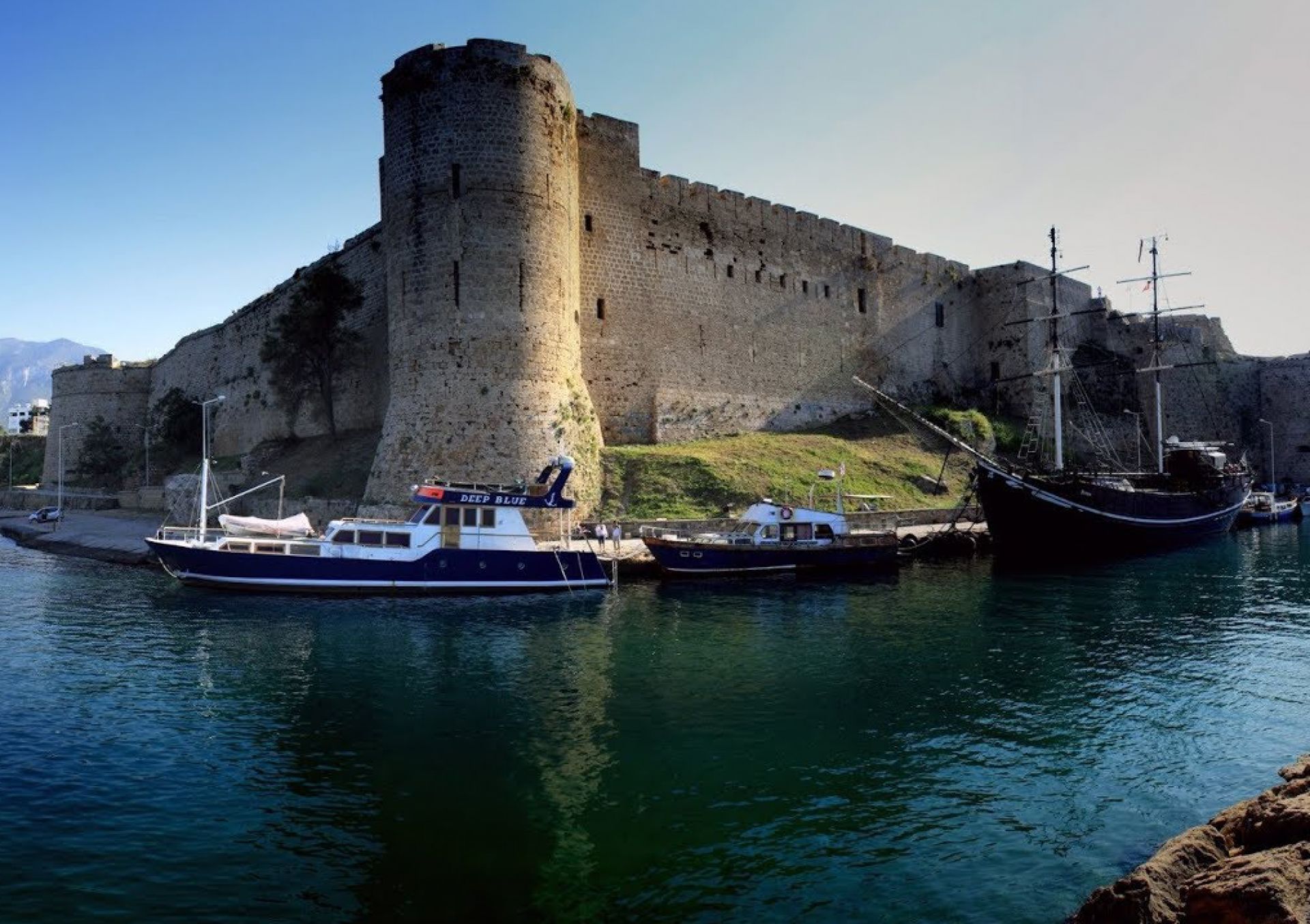
History of Kyrenia fortress
Kyrenia and surrounding
Architecture, Castles, Fortresses, Towers, Museums, Galleries, Exhibitions
Address: Küpdemir Sk
Research conducted in these places suggests that the Byzantines built the first castle here in the 7th century to defend the city against a new threat associated with the attacks of the Arabs. The first documentary mention of the site dates back to 1191 when King Richard the Lionheart conquered it during the third crusade when he defeated the Emperor of Cyprus, Isaac Komnenos. Soon Richard would sell it to the Templars, who in turn would sell it to Guy de Lusignan, the former king of Jerusalem. Thus began the three-hundred-year Franconian existence of the Kingdom of Cyprus under the leadership of this family.
At the very beginning, the castle was small, it was first enlarged in 1208-1211. its main function was military service, and improvements consisted of a new entrance, square towers, cellars and loopholes for archers.
The halls of the Royal Guard, the prison, and some others to the North and East of the court date from the Lusignan period. The Royal quarters in the Western part, as well as the large arched Windows of the Latin temple, are also preserved from those times. In the southern part of the courtyard are fortifications and ruins of the Byzantine period.
The castle has survived several sieges. The Genoese attack in 1373 almost destroyed it, and the longest encirclement in the XV century lasted almost four years and forced the inhabitants to eat mice and rats.
In 1489, Venice took Cyprus, and in 1540 expanded the castle to its present form. Then thick walls and gun embrasures were built. They were adaptations to changes in the military sphere, the invention of gunpowder weapons. The Venetians installed loopholes on three levels in order to direct fire against attackers from the ground. When the work was completed, the castle also included the small Church of St. George. The tomb of the Ottoman Admiral Sadik Pasha is also located here.
The castle was open to tourists only in 1960 after the Declaration of Independence of Cyprus. The Museum has been operating here since 1974. The Museum contains the remains of an ancient sailboat that was sunk in this area 2300 years ago.
