
- Home
- Social network
- Things to do
-


When selfies go wrong: don’t smash, break or damage artworks!
An Italian student smashed a Greek sculpture at Milan’s Academy of Fine Arts of Brera after he hopped on its lap in order to capture that perfect selfie.
- Travel routes
- Fellow travelers
-
In Oaxaca, Mexico, you can’t celebrate the holidays without radishes!
Every year on December 23, the Mexican state of Oaxaca presents the most impressive display of carved vegetables in the world.
- Stories
All content and media files are published under a Creative Commons Attribution-ShareAlike 4.0 International License (CC BY-SA 4.0)

Hitler’s Residence
Braunau am Inn and surrounding
Unusual places
Address: Salzburger Vorstadt 15
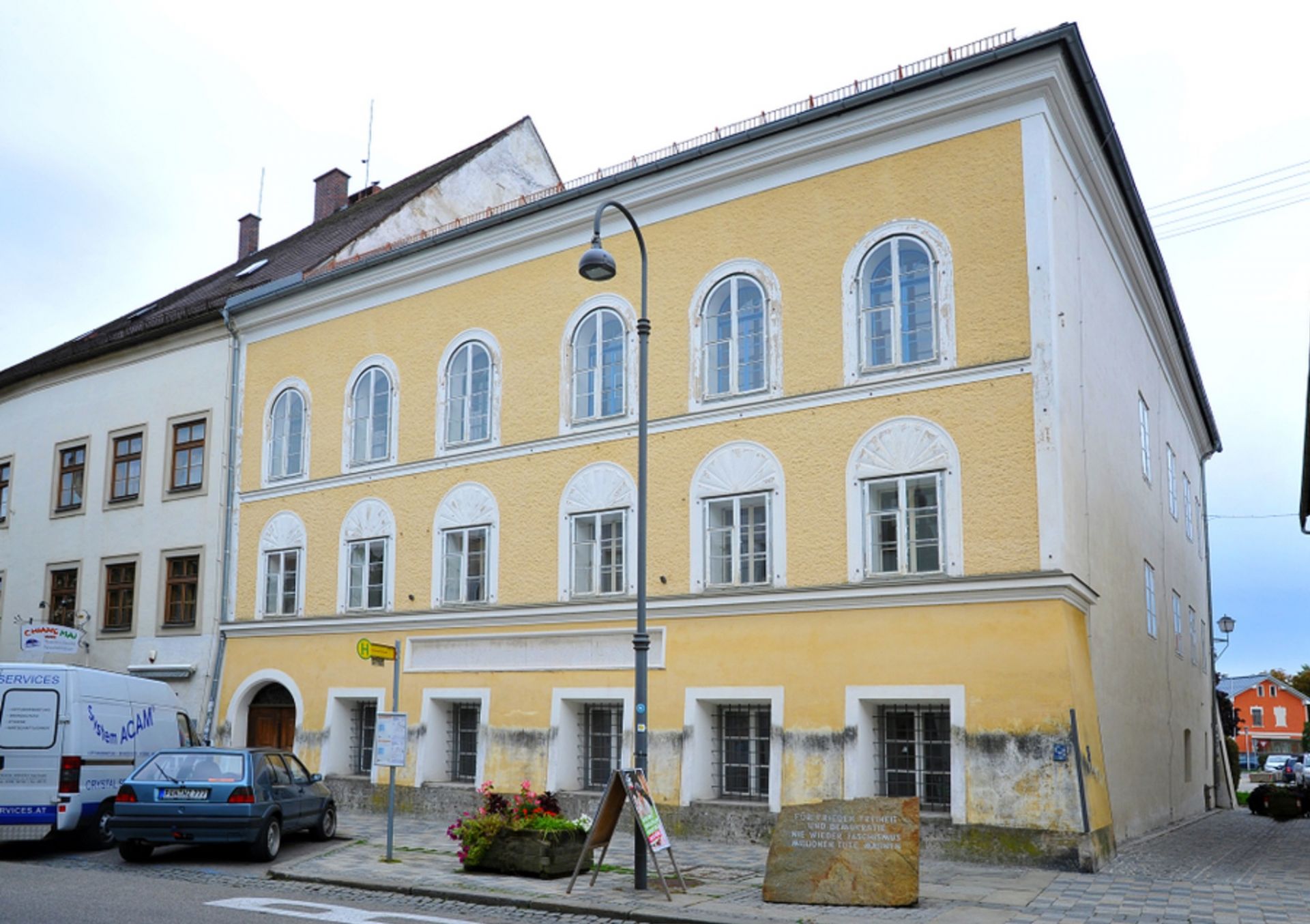
No matter how hard the world tries to forget it, the Second World War will always be remembered by countries, settlements, squares, houses and, of course, people. A small Austrian town of Braunau am Inn has been trying to wipe the life of one of its residents from the pages of its history. Here, in one of the calm districts, Adolf Hitler was born, this is where he spent his childhood.
In an ordinary apartment building, at Salzburger Vorstadt 15, where long ago a brewery was, there is a special room. Residents of the town try to keep silent about it. Archival and diary entries, photographs and other evidence telling about the life of Hitler are carefully hidden. The only reminder is a memorial stone, which was placed in 1989. It immortalizes the memory of victims of the Second World War. On the memorial, it is written: “For peace, freedom and democracy. Never again fascism. Millions of dead warn us.” Besides, the memorial was designed to prevent the spread of “Hitler tourism.”
Since 1972, the Austrian government has rent this room. There are no residents, offices and shops there. The building has been absolutely empty for tens of years. However, the house, which is located in the very heart of the city, attracts even more attention.
The building was not always empty. In the past, there was an art gallery and a public library; that was the main cultural center of the city. Right after the end of the war, in the house, which was occupied by American soldiers, there was a documentary exhibition that telling about Nazi concentration camps. In 1952, it was returned to its initial owners and, as a result, was used as a city library, technical college and kindergarten for the disabled. In 2014, the Austrian Ministry decided to open the “House of Responsibility,” the museum, which is dedicated to Hitler's crimes during the Third Reich period.
The ambiguous nature of such expositions and protesting residents forced the authorities to reconsider the plans. In 2016, the government decided to demolish the building and build a new one. However, the house still stands in the old place.
